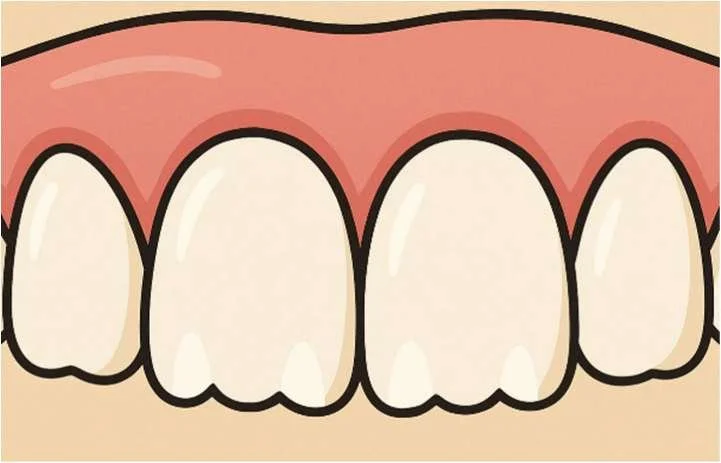
If you’ve ever noticed small, rounded bumps along the biting edge of newly erupted front teeth, you’ve seen mamelons. While they may look unusual to parents or patients who are unfamiliar with them, mamelons are a normal and temporary feature of tooth development, especially in children and adolescents.
Mamelons are the three small, scalloped projections found on the biting edge of newly erupted permanent incisors—the front teeth. Mamelons are part of the tooth’s enamel layer and form naturally during tooth development. When the tooth erupts into the mouth, these lobes may still be visible. Their presence indicates that the tooth is newly erupted and unworn, not damaged or defective.
Mamelons are completely normal anatomy and do not indicate any dental problem. They are not cavities, cracks or chips, they do not weaken the teeth, and they do not require treatment. Few theories on their function include:
Aiding tooth eruption: The serrated edge can help the tooth break through the gum tissue as it emerges.
Guiding alignment: May help guide the emerging teeth into a proper bite and alignment.
Initial cutting of food: May assist with the efficient cutting and tearing of food before the tooth is fully erupted.
In most people, mamelons gradually wear away through normal activities such as chewing, biting, speaking, and tooth-to-tooth contact. As the teeth come into regular function and occlusion, the biting edges become smoother. By late adolescence or adulthood, mamelons are often no longer visible.
Mamelons do not need to be removed. However, if a patient is concerned about the appearance, a dentist can smooth the edges with a conservative polishing procedure. This is optional and based entirely on personal preference.
It’s important to distinguish mamelons from tooth problems:
Mamelons: rounded, symmetrical, present on newly erupted incisors
Chips or fractures: irregular, sharp, and often associated with trauma
A dental professional can easily tell the difference during an exam.
Mamelons are a natural, healthy part of tooth anatomy and a sign of newly erupted permanent teeth. While they often disappear with time and normal use, their presence is nothing to worry about. Understanding mamelons helps reassure patients and parents that these small bumps are simply part of how teeth are designed to form and function.