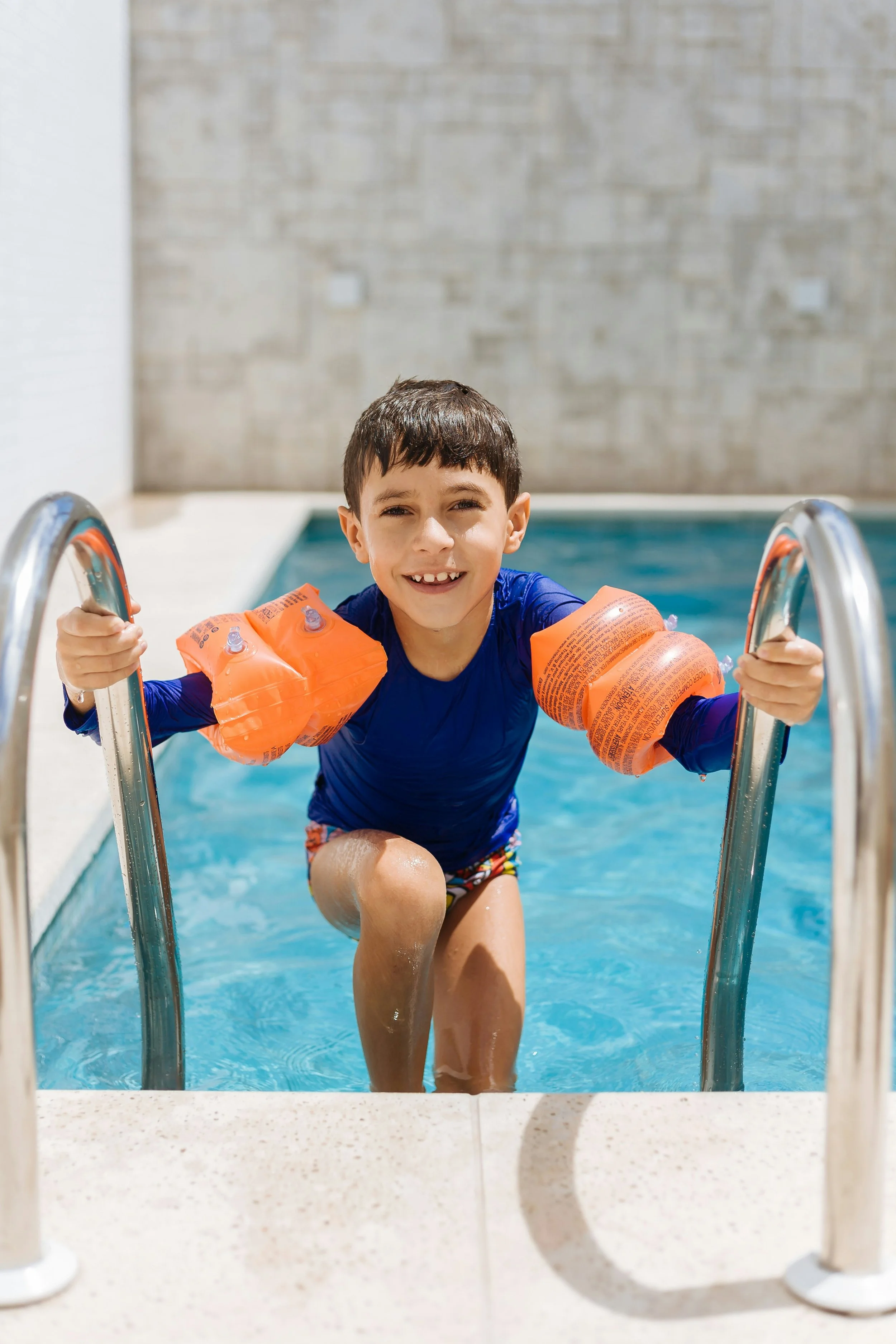
What Is Swimmer Stain?
If your child spends a lot of time in the pool, you may notice yellow or brown staining on their teeth. It’s sometimes called “swimmer stain,” and it’s fairly common in kids who swim frequently or competitively.
Why does it happen?
Frequent exposure to chlorinated water can change the acidity in the mouth and affect the surface of the teeth. Over time, this can make it easier for organic deposits and minerals to build up, leaving behind yellow or brown stains.
Swimmer stain doesn’t necessarily mean your child isn’t brushing well. Kids who spend several hours a week in the pool can develop staining even with good brushing habits.
What can you do about it?
Brush before swimming. The cleaner the teeth are before getting in the pool, the less plaque and organic material there is for deposits to attach to.
Rinse with water afterward. Have your child rinse their mouth with fresh water after swimming to help wash away pool water and bring the mouth back to a more neutral pH.
Wait before brushing. Don’t brush immediately after getting out of the pool. Waiting about an hour gives the mouth time to return to its normal pH before brushing.
Schedule cleanings more often if needed. For kids who swim frequently and tend to develop staining, we may recommend a cleaning every three months instead of every six. A professional cleaning can remove the buildup and help keep the discoloration under control.
If you’ve noticed staining on your swimmer’s teeth, mention it at their next visit. We can help determine what’s causing it and whether more frequent cleanings might help.