WISDOM TEETH: WHY THEY’RE OFTEN REMOVED AND WHY THEY DON’T CROWD YOUR TEETH
Wisdom teeth, also known as third molars, are the last set of teeth to develop. They usually appear between the ages of 17 and 25, a time historically associated with maturity—hence the name “wisdom” teeth. While they once served an important purpose for our ancestors, modern dentistry often recommends their removal. Understanding why can help clear up one of the most common misconceptions about them: that wisdom teeth cause crowding of the other teeth.
Most people develop four wisdom teeth, two on the top and two on the bottom, located at the very back of the mouth. Thousands of years ago, human diets consisted of coarse, rough foods like roots, nuts, and raw meat. Larger jaws and extra molars helped early humans chew and break down these tough foods. Over time, as cooking methods and food processing evolved, human jaws became smaller, but the genetic blueprint for wisdom teeth remained.
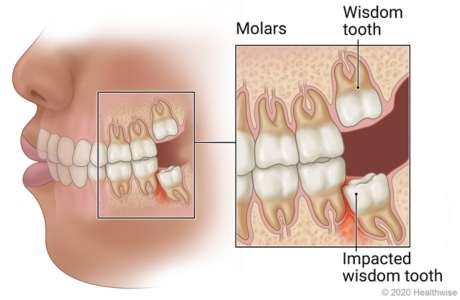
Today, many people simply don’t have enough room in their jaws for wisdom teeth to erupt properly. When there isn’t adequate space, wisdom teeth can become impacted, meaning they are trapped under the gum or grow in at an angle. This can lead to several problems:
• Pain and swelling: Partially erupted wisdom teeth can irritate surrounding gums and jaw tissue.
• Infection: Trapped food and bacteria around partially erupted teeth can cause gum infections.
• Tooth decay: Wisdom teeth are hard to reach and clean, increasing the risk of cavities.
• Damage to nearby teeth: Impacted wisdom teeth can press against second molars, potentially harming them.
• Cysts or other complications: In rare cases, impacted wisdom teeth can lead to cysts that damage bone or surrounding teeth.
Because these issues are common and often predictable, oral surgeons frequently recommend removing wisdom teeth before serious problems develop. This is advised in late adolescence or early adulthood when healing is faster.
One of the most persistent myths about wisdom teeth is that they cause the front teeth to become crowded or crooked. Extensive research has shown that wisdom teeth do not cause dental crowding. Crowding typically occurs due to natural changes in the jaw and teeth over time. As people age, teeth can slowly shift forward and inward due to clenching, chewing, and swallowing. This happens regardless of whether wisdom teeth are present. Studies comparing people who had their wisdom teeth removed with those who never developed them show similar levels of crowding later in life. In other words, while crowding may occur in adulthood, wisdom teeth are not the cause. What does cause your teeth to become crowded is the lack of a retainer or night guard being worn on a regular basis. So please remember to keep wearing your retainer every night, or as the saying goes, for just as long as you want your teeth to stay straight!